

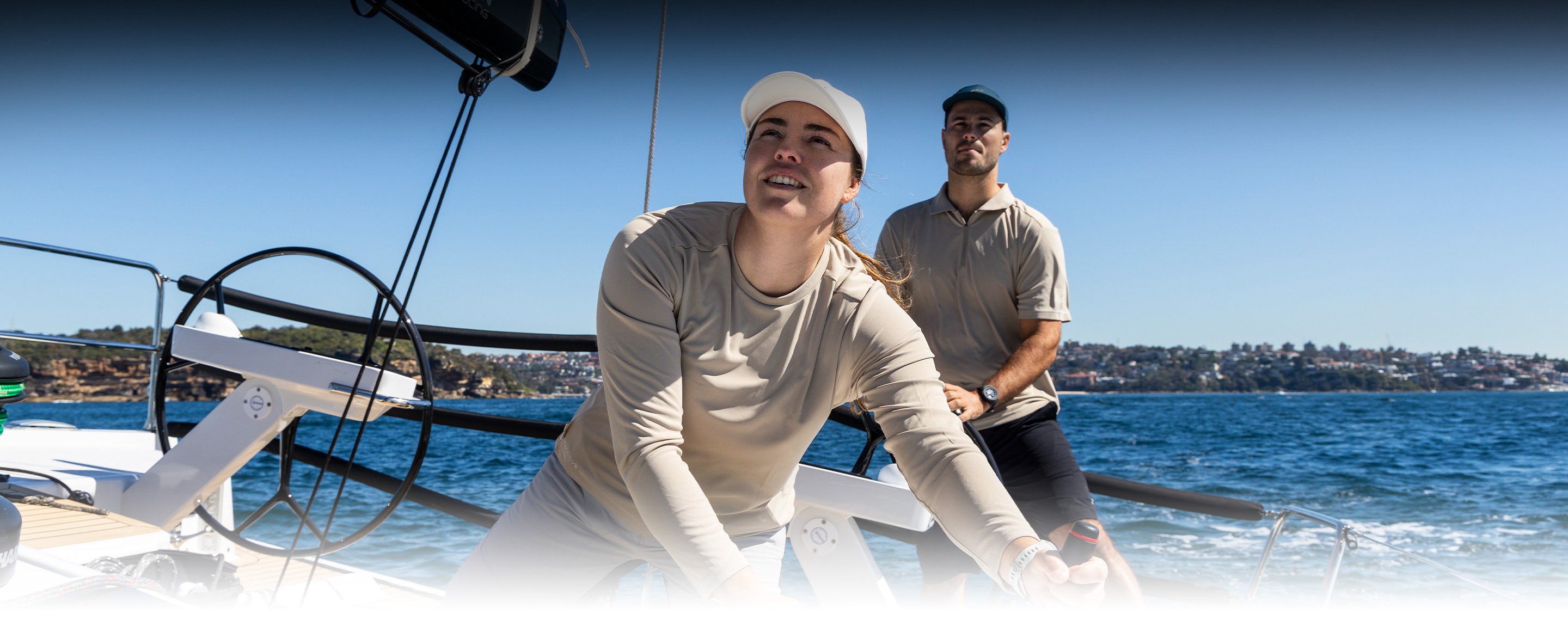
Whether you are racing a keelboat every weekend, doing the weeknight twilights, or heading out for a long day on the harbour, inshore sailing asks more of your kit than the distance suggests. Close to shore the wind can be unpredictable and gusty, with chop that is short and sharp and spray that arrives without warning. What you need at the start of the day is rarely what you need by the end of it.
At Zhik, we build for that. The answer is not one heavy jacket. It is a system, built from sun protection against the skin, insulation over it, a waterproof shell on top, and footwear that drains. Each layer does one job and works with the next without adding bulk, so a warm day might call for sun protection alone while a cold, wet one takes the lot. Here is how to put it together.
Everything You Need To Go Inshore Sailing
- UV protective tops and shorts
- An insulated midlayer for cool and cold conditions
- A waterproof shell, jacket plus pants, shorts or salopettes
- Sailing shoes with grip and drainage
- Sailing gloves for protection
- Headwear for sun and for cold
UV Protective Clothing
Sun protection is the layer you wear on every sail, in every season. Inshore, you are exposed for hours with water reflecting UV back at you, and cloud cover does far less than most sailors assume. This layer goes on first and stays on all day, so it has to be light enough to work under everything else.
The UVActive™ range is Zhik's sun protection platform. The tops are built from lightweight recycled polyester that wicks moisture and dries fast, and they carry UPF 50+ protection independently tested to AS/NZS 4399:2020, the Australian standard for sun protective clothing. The cut is slim and high-stretch, which is what makes it work as a base layer, sitting flat under a midlayer and a shell without bunching as you move around the boat, cross during a tack or work the ropes. Long sleeve for full arm coverage, short sleeve for warmer days.
For legs, Stretch Fast Dry Deck Shorts give you UPF 50+ coverage in a 4-way stretch fabric that moves with you across the boat and dries quickly after a wave comes over the rail. They carry Zhik's XWR™ water repellency, which sheds spray rather than soaking it up. Elite Sailing Shorts do the same job with abrasion-resistant panels added where the deck and the rail wear shorts out fastest, which matters if you spend long periods sitting on the side. Neither adds weight or restricts movement, which is what earns this layer its place on every sail.


Midlayer Jackets And Gilets
The midlayer is where the system earns its flexibility. Too much insulation and you overheat while you are moving, then chill the moment you stop. Too little and you are cold from the first spray onwards. What you want is warmth that sits close, breathes, and does not fight the shell over the top of it.
The Daybreaker Mid-layer Jacket is built for exactly that. Repreve® recycled synthetic insulation traps heat in a low-bulk profile, and the wind-resistant 2-layer woven outer shell carries a BIONIC-FINISH® ECO PFAS-free Durable Water Repellency treatment, so light spray beads and runs off instead of wetting out the insulation. Raglan sleeves free the shoulders. The mid-height collar seals the gap at the neck and sits cleanly under a waterproof shell rather than bunching against it. Water-resistant zippers run through every opening.
The Daybreaker Mid-layer Gilet is the same construction without the sleeves. It keeps the core warm while leaving the arms completely free, which is what you want when you are grinding, trimming or working the pit and a full jacket would be more than you need. It is also the layer most likely to stay on when you get off the boat.
For full-body warmth, the Daybreaker Mid-layer Salopette extends the midlayer below the waist and is designed to pair with either the jacket or the gilet.
The Hybrid Fleece Jacket takes a different route to the same result. It is built from 200 and 360gsm recycled fleece, with windproof, water-repellent softshell panels across the chest, shoulders and upper back, so you get insulation through the body and wind protection exactly where the weather hits first. A mid-height collar closes the gap at the neck. It layers under a shell in cold, wet conditions, and it holds its own as the outer layer on moderate days when salopettes are all you need on deck.


Waterproof Inshore Jackets And Pants
The shell is the layer that deals with the weather, and inshore that means sustained spray and short bursts of rain rather than days of open ocean conditions. It has to stay waterproof through repeated soaking, and it has to breathe fast enough to keep up with the work, because inshore racing can be more physical than the distances suggest.
Zhik's inshore shell range runs on two jackets. The INS400™ Inshore Performance Jacket is the racing option, built on an advanced 3-layer construction with a soft tricot inner face, SAB water-resistant zippers throughout, a three-point stowable hood and extended back coverage for when you are bent over a winch. The INS300™ Inshore Active Jacket is the crossover between racing and everyday wear, a 2-layer shell with a micro-fleece lined torso and taffeta-lined sleeves that slide over a midlayer without catching, and clean enough styling to wear off the boat. It is also available in youth sizing, which makes it the starting point for family and junior sailing.
Both jackets carry a BIONIC-FINISH® ECO PFAS-free Durable Water Repellency treatment on the face fabric, so water beads and sheds rather than saturating the outer layer and dragging the jacket's breathability down with it.
Below the waist, the INS400 range runs as salopette, pant and short in the same construction as the jacket. Which one you reach for is a question of how wet the day is. Shorts for warm, moderate conditions, pants for sustained spray, salopettes when it is cold and wet and you want the coverage to run all the way up your back. The salopette uses webbing shoulder straps instead of elastic so it does not bounce, with an anti-twist buckle and a micro-fleece lined waist cinch.
The two ranges are built to work together, so you can pick the combination that suits the day rather than committing to one range. An INS400 jacket over INS400 bottoms gives you the full racing setup. An INS300 jacket over INS400 bottoms puts the protection where the water is worst while keeping a lighter, more wearable jacket up top. The same INS300 jacket then works on its own for a cruise, a delivery or the trip to the club.
Which jacket you start with comes down to how often you sail and how exposed you are when you do. The INS400 is the choice if you race regularly, sail in demanding inshore or coastal conditions, or want the most room to layer underneath. The INS300 is the choice for moderate conditions and club sailing, and for anyone who wants a jacket that works as well off the boat as on it. To go deeper on how the two are built, read The 2026 Inshore Range Guide.


Inshore Sailing Shoes
Sailing shoes have two jobs inshore. They have to grip a deck that stays wet for most of the day, and they have to get rid of the water that lands in them. Drainage is the one most sailors underestimate. A shoe that holds water gets heavy and cold, and it stays that way until you step off the boat.
The Surge Performance Race Shoe is the racing option. A side-ejection drainage system works with integrated channels to push water out and keep it out, so the shoe stays light through the day rather than filling and staying full. The hybrid rubber sole pairs a dual-purpose tread for flat and textured surfaces with sipping grooves cut for traction on slick, wet decks, and ripstop nylon reinforcements at the toe and heel take the wear from the toe rail and the foot chocks. The fused mesh upper is stitchless, which means fewer seams to fail and faster drying.
The ZKG Amphibious Shoe is the versatile one. At 300g per shoe it is genuinely light, with a breathable mesh upper, fast one-way drainage channels and a perforated insole, over a high-grip non-marking rubber outsole carrying Zhik's marine tread pattern. TPU-coated overlays at the toe, heel and upper handle abrasion. It grips and drains on deck, and the clean, skate-inspired silhouette carries it straight off the boat to the club and into the street without a change of shoes.


Inshore Sailing Gloves
Your hands take the load on every sheet, halyard and winch handle. Blisters and rope burn end days early, and cold hands cost you performance when you need it most.
Zhik's glove range splits by application and by the job you are doing on the boat. Deck Sailing Gloves are the all-purpose option for general sailing and cruising, in half and full finger. Elite Heavy Duty Sailing Gloves step up the durability for high-load racing where the sheets are loaded and the sessions are long, again in half and full finger. Tactical Lightweight High Grip Gloves are built thin and high grip, so you keep feel and flexibility through fine work where a padded glove would get in the way, and they come as a three pack. Superwarm® Performance Neoprene Gloves use 3mm insulated neoprene with a fast-drying inner and a high-grip palm, which is what keeps you on the water through the coldest days.
Half finger gives you dexterity for fine trim and knot work. Full finger gives you complete protection and warmth.


Hats And Beanies
Headwear closes the last gap in the system. The head, the ears and the back of the neck are exposed for the whole sail, to sun in summer and to wind chill in winter, and neither a shell hood nor a base layer covers them properly on its own.
For sun, the Structured Sports Cap is fast drying and lightweight with a retainer, so it stays with the boat rather than going over the side on the first gust. The Wide Brim Hat and Bucket Hat give you coverage around the ears and the back of the neck, which is where the reflected UV does most of its damage over a long day.
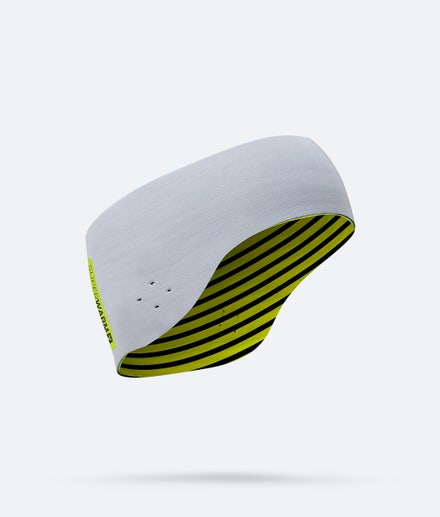
For cold, the Thinsulate® Insulated Beanie uses 3M insulation in a soft, low-bulk profile with a high cuff to protect the ears from cold wind. Low bulk is what lets it sit under a hood, which is the detail that matters when the spray is coming over.




Inshore sailing rarely hands you the same conditions at the end of the day that you started with, and no single garment covers that range. A system does. Every layer here is built to work with the one over it, which is what lets you adapt as the day changes without carrying gear you are not wearing.
At Zhik, that is the brief we design to. Whether you are racing every weekend or heading out for a long day on the harbour, we build inshore gear that adapts with the conditions instead of forcing you to choose at the dock.